The twentieth of January 2019

goats

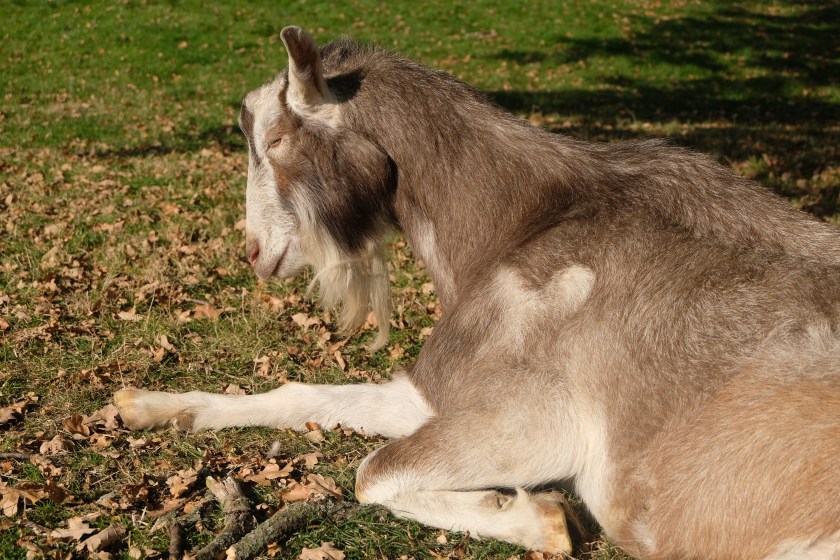
Oxygen is amazing. It enters our body through our breath, without which, we (and other mammals, including goats) would not survive. It nourishes us, sustains us, and we don’t even have to think about it, yet we do it 20,000 times a day. Amazing!

18.1.19

Breathe in, breathe out.

The thirteenth of January 2019

goats

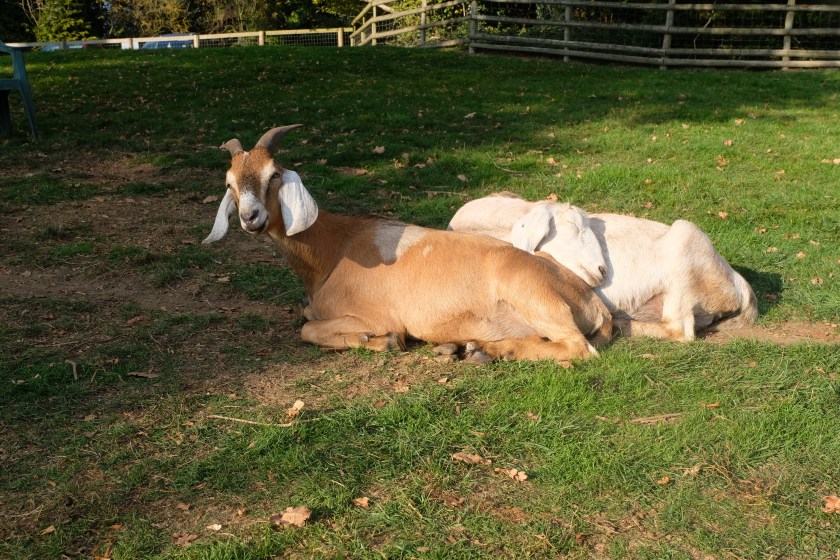
We are now nearly two weeks into 2019. Hopefully, at some point between the holiday festivities, embarking on resolutions and returning to work, you have carved out some much-needed time for rest. Although for many of us (myself included) it is hard not to fill every moment with seemingly important tasks, there are many benefits to devoting ourselves to relaxation. Rest can enhance creativity, productivity and focus. Setting aside time for regular rest can also reduce stress, inflammation and your risk of heart disease. Your sleep and immune system will get a boost from the reduction in sleep. So, never feel guilty for indulging in a lazy Sunday – it will make you a happier, healthier, more creative version of yourself!]

13.1.19.JPG

Rest today for a more productive and energized tomorrow!

The twenty ninth of December 2018

goats

Yo, it is the last Saturday of 2018, sit down, relax, have a delicious beverage, and ruminate on the year.

29.12.18.JPG

The final weekend of 2018 is an excellent time to relax and reflect. 

The eleventh of December 2018

goats

Gossip is a pervasive means of communication in human societies. You might think that all gossip is bad and entails people speaking negatively about an individual or group; however, gossip can actually function in a way to the benefit of human groups. For example, gossip can help maintain equilibrium amongst egalitarian societies. Although gossip is seen as a negative and deadly action by the Talmud, gossip can provide a way for people to connect and feel closer to one another, and social scientists claim that only 3 to 4 percent of gossip is actually malicious. Gossip may have even provided an important social tool in human evolution, as a means to assess members of growing communities and maintain cohesion of social groups. Perhaps Oscar Wilde was right, when he said that the only thing worse than being talked about is not being talked about. At any rate, if you suspect you are being gossiped about you can probably conclude that at a minimum, people find you interesting.

11.12.18.JPG

Don’t worry, most gossip is not even bad!

The sixth of December 2018

goats

What may feel like a tiny gesture of kindness to you could transform the recipient’s day. Isn’t that amazing? In all of us, we have the power to spread joy and compassion, just by being kind. One of the reasons I think that I am so keen on goats is that smiles are contagious. I can’t help but smiling back when I see a goat, even if that goat is giving me a smidgen of side-eye. Even when you have a difficult day, flashing someone a smile or doing a small act of kindness can be a form of self care. It is especially important to remember to be kind during the holidays, you never know what the stranger on the bus or person you pass on the street has going on.

6.12.18

Smile at strangers and be kind to all.

The twenty seventh of November 2018

goats

Even goats get itchy sometimes. Itches are scientifically known as pruritus, basically a general neurological response to irritants that come in contact with the skin. Most of the time, itches are just momentary nuisances; however, sometimes an itch is the body’s response to exposure to harmful things like urushiol. Goats are lucky that they do not get the same painful, itchy rash from the urushiol found on poison ivy and other plants. However, goats may get itchy from itch mites and lice, and even excessively dry skin. Horns and hooves make good tools for satisfying the occasional itch, and most of the time an itch is just an itch.

27.11.18.JPG

Everyone gets itchy sometimes.

The twenty third of November 2018

goats

It is getting cold out there, I strongly suggest dressing in layers. Angora goats are known for their distinctive, soft and luxurious coat that is processed to make mohair. Mohair is often a popular choice for winter clothing because it is very easy to dye as it is naturally white or silver. However, in recent years, it has come to light that Angora goats exploited for their wonderful coats are heinously and cruelly abused, leading some major clothing companies to ban mohair altogether. Although mohair knits can be snuggly and warm, there are plenty of perfectly suitable synthetic options that don’t involve cruelty towards the Angora goats.

22.11.18

Fantastic and functional winter style should not use cruelly procured Angora goat wool.

The twenty-first of November 2018

goats

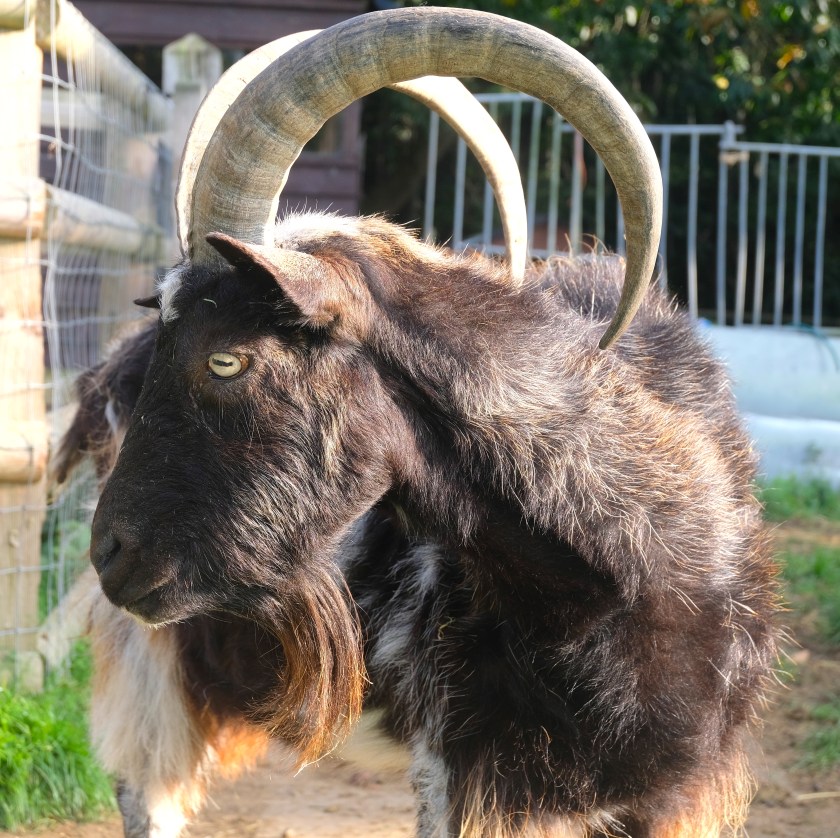
Aren’t the horns on this goat beautiful? Contrary to popular belief, both male and female goats can have horns. Horns are bony protrusions stemming from the head of goats and other hoofed creatures that are covered in keratin, much like human hair and nails. Goats use their horns in a variety of creative ways, including to fend off potential predators, to communicate with one another and establish dominance in a group, to trim the bark off of trees for food, and even to attract sexual partners. There is a process called disbudding, in which the goats horns are removed shortly after birth, assumably to prevent potential problems like getting stuck in a fence or having a scuffle; however, there is a lot of debate over whether this practice is harmful or beneficial to goats. Sadly, I do not own any goats and by no means am a goat expert, so I really can’t weigh in; however, in general, I think goat horns are pretty amazing.

21.11.17.JPG

 If I had a pair of horns like that, I would show them off too.


The thirteenth of November 2018

goats

How long have humans and their related ancestral species created art? It is entirely impossible to know for sure, as many mediums may have not survived millennia and it is difficult to say what a person living during the Paleolithic era would have considered art. The earliest forms of art identified by archaeologists come from paintings in caves, most famously the Lascaux Caves in southwest France. Cave art is prevalent throughout France and Spain; however, recent research has identified even older examples in Sulawesi, Indonesia. Last week, a paper in Nature describe the oldest known cave art that was crafted at least 35,000 years ago in the East Kalimantan mountains of Borneo, Indonesia. The inside of the cave is said to be entirely covered in art, including animals and outlines of human hands. Of course, one of the animals that was painted onto the walls of Lubang Jeriji Saléh was indeed, a goat. As new dating methods emerge, archaeologists theorize that some cave art in Europe may be as old as 65,000 years, which means they were created by Neanderthals rather than modern humans. At any rate, the new discoveries from Borneo show that goats have always been part of the story of humans, even before their estimated date of domestication approximately 10,000 years ago.
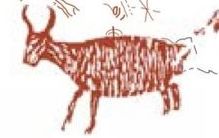
Oldest painting of animals GOTD 12.11.18

An image of a goat on the wall of the Lubang Jeriji Saléh Cave, painted 35,00 years ago.