The twenty fourth of January 2020

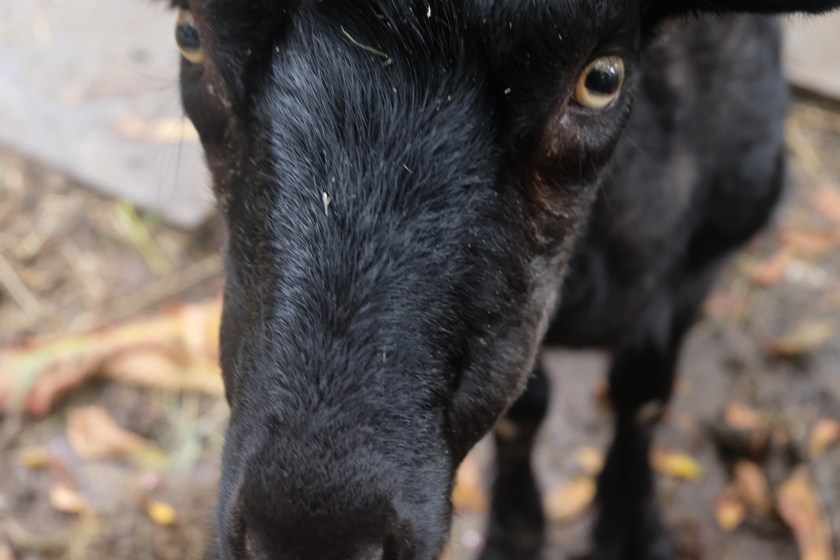
goats

Today is the first new moon of the decade. A new moon is kind of an opposite of a full moon, so sometimes it may appear as though there is no moon on the evening of a new moon. It is considered the first lunar phase, and is the point in which the moon and the sun are closest in ecliptic longitude, but not so close that it causes a solar eclipse. In astrology, which of course is not scientific but can be fun anyways, this new moon rises in the sign of Aquarius – a zodiac sign and constellation that represents (amongst other things) rebellion. New moons typically represent fresh starts, and due to the unique position astrologically of this new moon maybe it will inspire you to unleash your inner rebel and take up an awesome cause. As we can all see from the headlines, perhaps the world is in need of some collective, rebellious and revolutionary energy.

The thirteenth of September 2019

goats

Today is an exceptional day. First, it is Friday the Thirteenth. Second, it is a full moon, specifically the Harvest Moon. It is called the Harvest Moon as it is the full moon that occurs closest to the Autumnal Equinox. In addition, it is also a micro moon, which means that the moon is positioned at its apogee, its most distant point away from the Earth along its orbit. Full moons are wondrous times to sit back and reflect, let go of what no longer serves you, and the harvest is the best time to gather together what nourishes you and leave the rest.

Don’t be freaked out, today is actually a wonderful day to renew and revitalize!

The twenty sixth of June 2019

goats

Think of all the things that we have discovered in the past decade. We (as in human society) sent a craft to photograph the planet Pluto. We discovered earth-like planets orbiting a nearby dwarf star. There are so many applications that make our lives easier and put the world at our fingertips. We essentially live with pocket computers. We have made incredible advancements in gene therapy and made strides to understand the effect that gut bacteria has on our overall health. Just imagine what more there is to discover and what amazing things the future will bring.

Always stay curious.

The twenty first of June 2019

goats

Today is the longest day of the entire year, if you live in the northern hemisphere. Because the planet Earth (the one we live on) rotates around the sun on a tilted axis, certain parts of the planet get more or less sun depending on the time of year. Basically, billions of years ago, when our solar system was being formed, tons of bits of mass collided together to form mini planets, which then collided together to form proto-planets, which eventually became most of what our planet is now. Then, another pro-planet collided with the prelude to Earth and put us on our lovely little tilt which is reasonable for the seasons. Amazing! And the seasons are a big part of why life was able to flourish on our planet. Incredible how things tend to all fall into place like that!

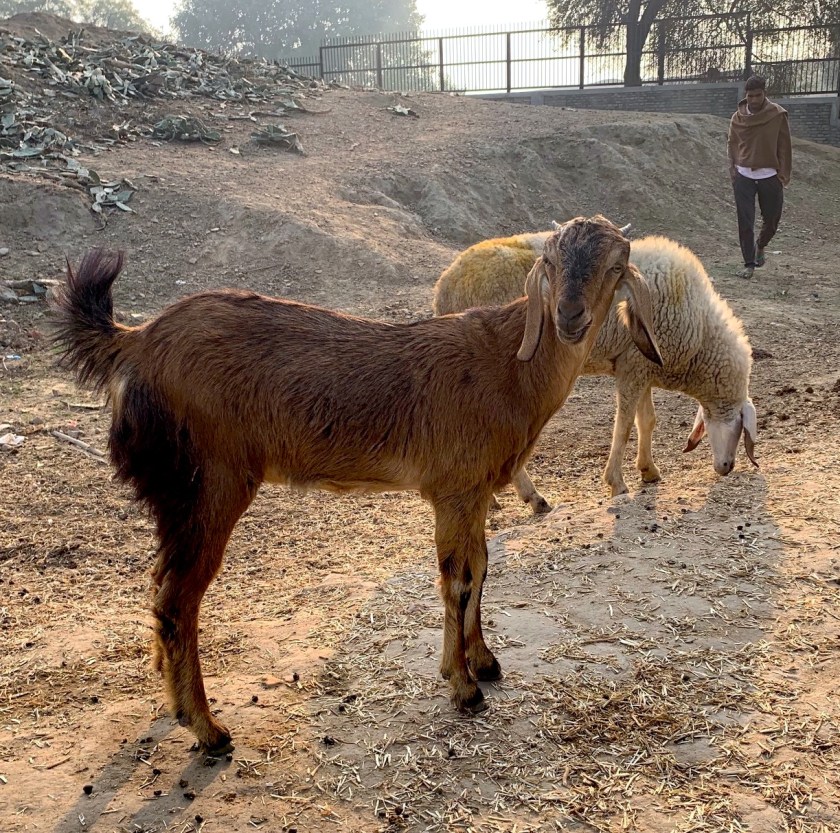
Completely fantastic how millions of collisions resulted in a planet with goats. Amazing.

The twenty eighth of February 2019

goats

By the time February rolls around, the sparkle of the festive season is long gone, and the hopes of the new year start to feel a bit stale. Also, in many places, February has the worst weather out of the year (climate change related spring fake-outs notwithstanding). So, maybe whoever set up the way we keep track of time way back when felt the same way? Perhaps!

Throughout human history, people in different cultures and places had different conceptions of how to track the passage of time. The calendar most of us are familiar with is the Gregorian calendar, created in 1582 under the direction of Pope Gregory XIII, who was trying to solve the problem that seasons do not always change in formulaic ways and that it takes Earth 365.24219 days to revolve around the sun – making the possibility for calendrical wonkiness quite high.

So then, why is February so short? Actually, this time you can’t really blame a pope.  The origins of the calendar take us to the eighth century BC, when the smaller Roman world was organized on the calendar of Romulus – ten months of the year beginning with March on the vernal equinox. Winter was mostly unaccounted for, so you had about two months of calendrical void. To solve the issue, King Numa Pompilius added two months – January and February, and roughly organized the calendar to lunar cycles. This made more sense and you could finally schedule winter time appointments! Pompilius and other people at the time apparently thought that even numbers were unlucky and when they hashed everything out decided that if there had to be an unlucky month in order to have 355 days in  a year, it should be the shortest. By the time Julius Caesar reorganized the calendar to come to 365 days on a solar-based model, the twenty-eight day short month of February was here to stay. I suppose that over a millennia everyone from the pre-Roman Republic kings to Renaissance Popes basically agreed that this time of year is a bit of a bummer, keeping the month to 28 (sometimes 29) days a year.
28.2.19.jpeg

Perhaps take solace in the fact that historically, February has always kind of sucked?