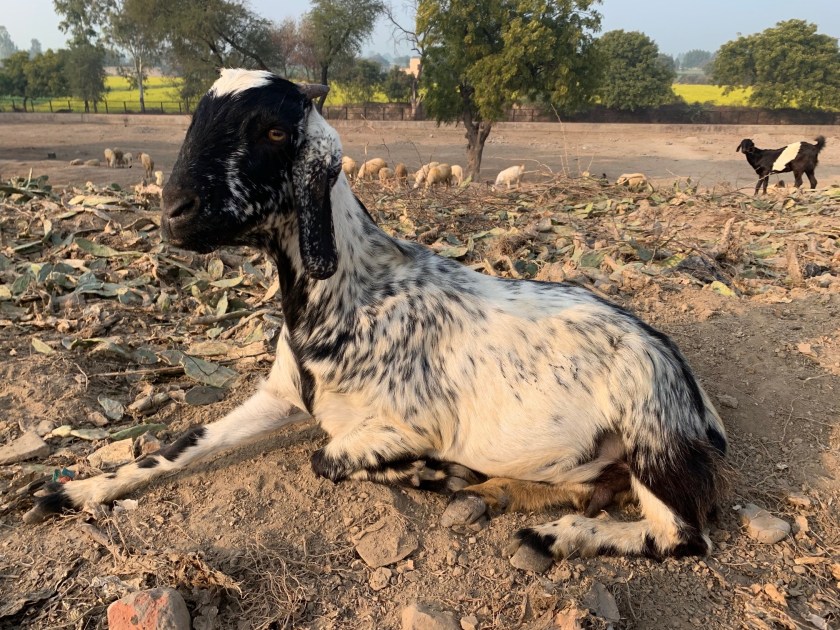
The fifteenth of May 2019

goats

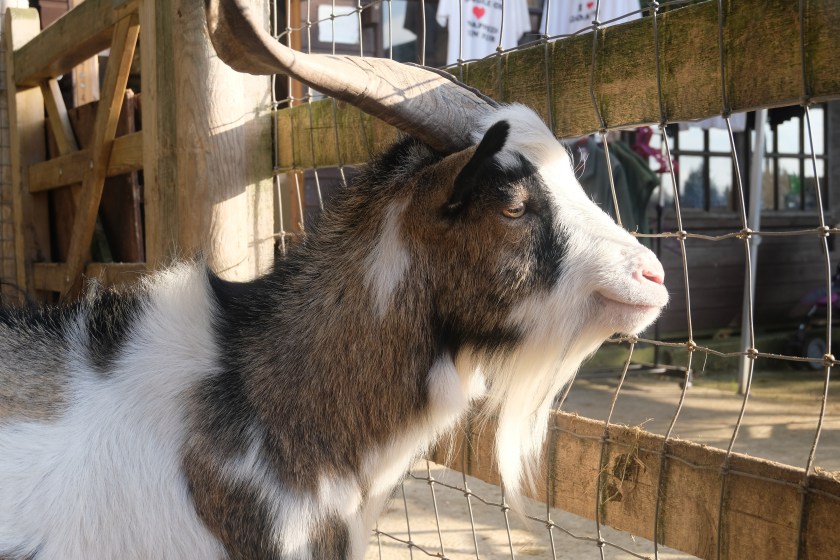
Isn’t is amazing that compassion for others is a major theme of every major world religion? Everyone, no matter what choices or circumstances they have in life, experiences suffering. Not only is compassion featured prominently as a way to be in the world across all religions, but there is an evolutionary component. When we experience compassion, our hormones secrete oxytocin in parts of our brain activating our pleasure centres. I’m not going to promote a specific religion – or lack thereof – I’m just saying that we suffer far less when we are willing to suffer together.

15.5.19.JPG

Live compassionately and spread joy.

The twenty second of April 2019

goats

We live in a beautiful world, full of diverse life and environments. Sadly, the world is changing as the global temperature climbs higher and higher every year. Today is Earth Day, and perhaps consider two things. First, think about ways that you can help out. Maybe instead of driving to a shop you cycle, walk or take public transportation. Start carrying some cloth bags to carry your groceries in and say no to disposable plastics. Or even consider reducing your consumption of meat and dairy products. Second, demand that your government representatives take the threat of climate change seriously, as it effects us all. The Earth is a wondrous place, and we are her stewards, it’s up to us to set things right.

The time for climate action is now.

The sixth of April 2019

goats

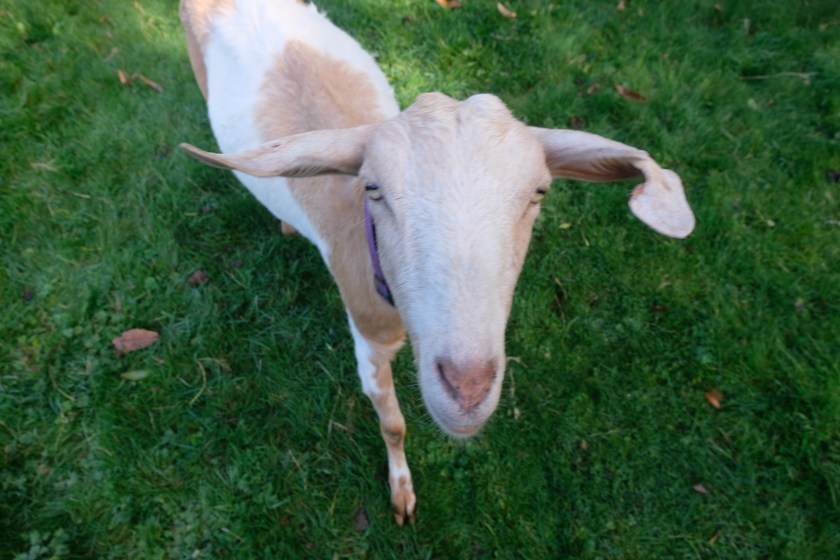
Although many stereotypes would have you believe that goats like to eat garbage, we know that goats are usually just trying something out with an experimental chew before deciding whether or not its worth eating. That said, goats end up eating a lot of leafy green vegetables! Leafy green vegetables should also be a part of a human’s diet, as they are nutrient dense, with minimal calories, and help support a healthy immune system. They are also full of antioxidants, which help prevent your body from developing cancer. I like to eat a big pile of raw spinach with an egg in the morning.

6.4.19.JPG

Perhaps goats are wiser about food choices than we realize!

The fourteenth of March 2019

goats

Pi is the ratio of a circle’s circumference to its diameter. Its value is usually abbreviated to 3.14159; however, as an irrational number, Pi goes on infinitely. An irrational number is a number that cannot be made into a fraction. Pi is irrational, but without it we would have no idea how to calculate things like the size of the world or how much flour should be used to make a perfect twelve-inch pizza. If an idea seems irrational to you, perhaps it might still be possible. Perhaps, like Pi, the world is full of infinite seemingly irrational possibilities. What is irrational today may revolutionize tomorrow.

DSCF3859.JPG

Enjoy some delicious pie and contemplate the infinite possibilities, happy Pi Day! (3.14)


The thirteenth of March 2019

goats

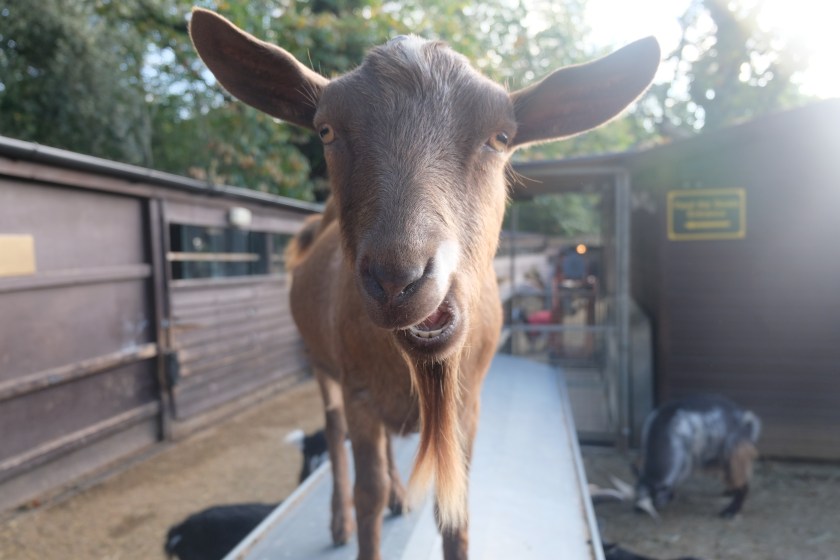
I am pleased to introduce you to Annie, Ernest’s sister from The Haven Zoo. Annie and Ernest are known around the Haven as a warm and friendly pair who greet visitors. Research has shown that goats often try to form relationships with the humans in their lives, similar to dogs. Perhaps it is because after 10,000 years of living together, goats see us as kindred spirits? Or perhaps it’s because The Haven Zoo is a wonderful home and Annie and Ernest are keen to show visitors around? Find out more about how to support Ernest, Annie and the rest by clicking here and come back for more goats tomorrow!

13.03.19.jpeg

Annie loves showing people around her home at the Haven

The twenty eighth of February 2019

goats

By the time February rolls around, the sparkle of the festive season is long gone, and the hopes of the new year start to feel a bit stale. Also, in many places, February has the worst weather out of the year (climate change related spring fake-outs notwithstanding). So, maybe whoever set up the way we keep track of time way back when felt the same way? Perhaps!

Throughout human history, people in different cultures and places had different conceptions of how to track the passage of time. The calendar most of us are familiar with is the Gregorian calendar, created in 1582 under the direction of Pope Gregory XIII, who was trying to solve the problem that seasons do not always change in formulaic ways and that it takes Earth 365.24219 days to revolve around the sun – making the possibility for calendrical wonkiness quite high.

So then, why is February so short? Actually, this time you can’t really blame a pope.  The origins of the calendar take us to the eighth century BC, when the smaller Roman world was organized on the calendar of Romulus – ten months of the year beginning with March on the vernal equinox. Winter was mostly unaccounted for, so you had about two months of calendrical void. To solve the issue, King Numa Pompilius added two months – January and February, and roughly organized the calendar to lunar cycles. This made more sense and you could finally schedule winter time appointments! Pompilius and other people at the time apparently thought that even numbers were unlucky and when they hashed everything out decided that if there had to be an unlucky month in order to have 355 days in  a year, it should be the shortest. By the time Julius Caesar reorganized the calendar to come to 365 days on a solar-based model, the twenty-eight day short month of February was here to stay. I suppose that over a millennia everyone from the pre-Roman Republic kings to Renaissance Popes basically agreed that this time of year is a bit of a bummer, keeping the month to 28 (sometimes 29) days a year.
28.2.19.jpeg

Perhaps take solace in the fact that historically, February has always kind of sucked?
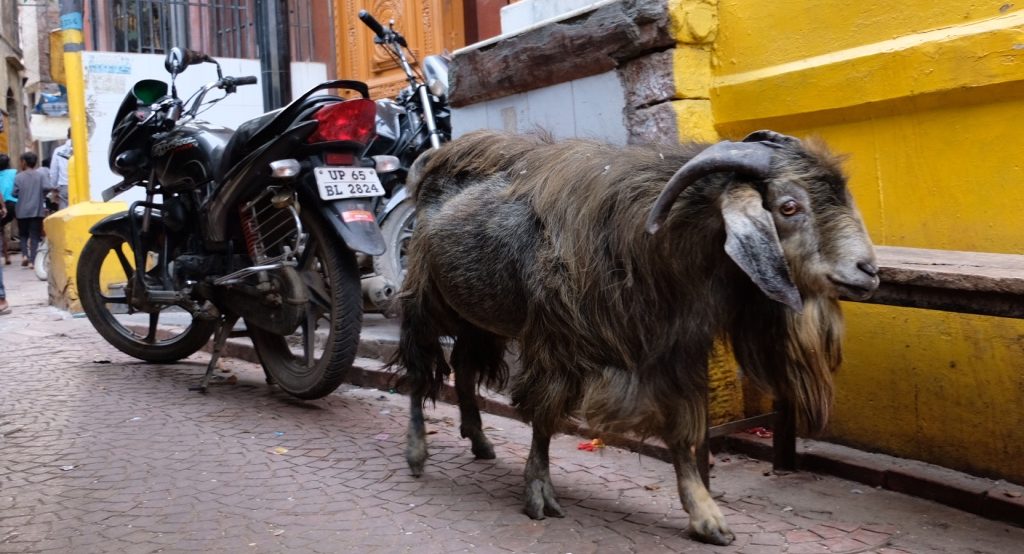
The twenty seventh of February 2019

goats

This week has been unseasonably warm in the U.K. with record-setting temperatures. The weather has been quite lovely, especially compared to this time last year when the country was blanketed with a layer of snow and engulfed in grey clouds. Some people are excited, but it is hard not to feel uneasy under the spectre of last fall’s Intergovernmental Panel on Climate Change. The report warned that if we, humanity, do not make big changes to combat the worst effects of climate change, we would reach a point of no return in twelve years. So far, Goat of the Day has been a light-hearted blog with good vibes, and I don’t meant for the good vibes to be extinguished by anxiety about climate change. Rather, channel the positivity and sunshine to take action – cycle, walk or use public transportation whenever possible. Make it clear to policy makers in your town or city that we need more efficient infrastructure in order to reduce our carbon footprints. Buy less stuff of better quality, and opt for reusables over disposables. Even consider hiring a local herd of goats to tend your lawn rather than relying on mowers and pesticides. The world is a marvelous place, and we owe it to ourselves and each other to keep it that way.

27.2.19.JPG

You can enjoy the sunshine and be concerned for the future at the same time.

The fourteenth of February 2019

Uncategorized

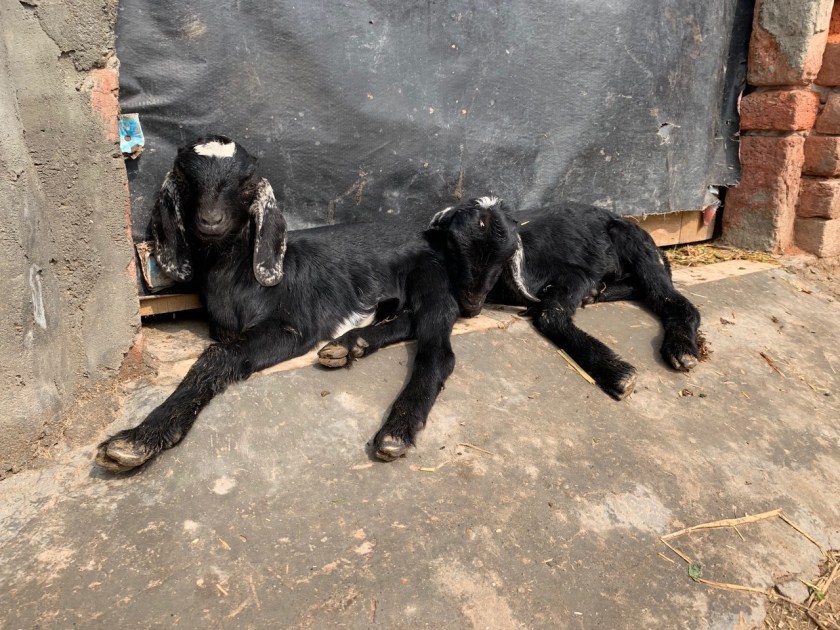
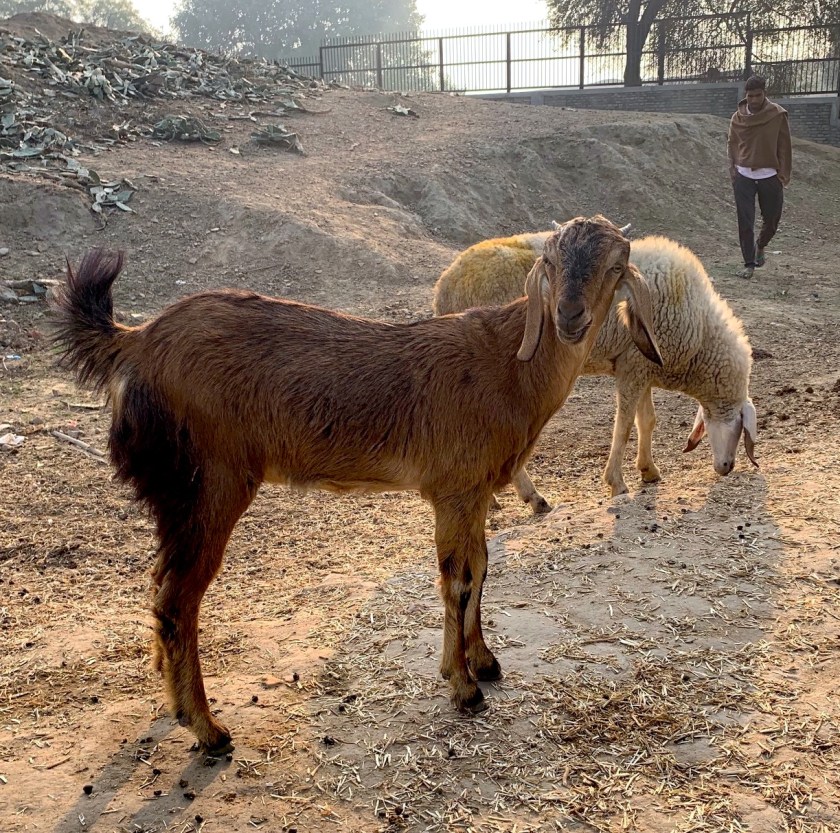
Happy Valentine’s Day to all who celebrate – and if not here are a couple of goats hanging out in Haryana. Every day is a great day to eat chocolate and enjoy the people in your life who matter most. I’m grateful for my partner who took a break from doing science to send me today’s photo ❤️

Snuggling should be on the agenda everyday.

The twelfth of February 2019

goats

A friend of mine who lives in San Fransisco lives in a house nearby where a herd of goats has been hired to clear weeds and brush! City grazing rents out their herd to graze on brush and weeds, eliminating the need for fuel-guzzling lawn mowers and toxic herbicides! Not to mention, goats help prevent weeds and secondary growth from returning because they stop seeds form spreading, AND clearing out the brush helps prevent wildfires! Plus, goats are amazing – wouldn’t you rather see a herd of goats happily munching away rather than someone on a lawnmower?

12.2.19

Sustainable land management can be fun. 

The eleventh of February 2019

goats

Today’s goat was photographed at an amazing place called Rakhigarhi by my partner who is currently working in Haryana, a state in northwest India. Rakhigarhi is home to two villages, Rakhi Khas and Rakhi Shapur which are situated on top of an ancient city, 4,500 years old, part of a constellation of ancient cities belonging to what archaeologists call the Indus Valley Civilization. Unlike other ancient civilizations with clear evidence of social hierarchy such as pyramids, elaborate burials or elite palaces, the Indus left behind few traces of these markers. Needless to say, the people who lived in Indus Valley cities and settlements had standardised units of measurement, a system of writing, and networks of homes and workshops within centres that appeared to be in contact with one another and as far away as Mesopotamia. Archaeological investigations in 2018 revealed a cemetery that has been the subject of much debate. However, the villages carry on farming, herding buffalo and sometimes goats, and are quite welcoming to researchers and foreigners. I had the privilege of living in Rakhigarhi for a few months in 2012, and it was one of the most transformative and wonderful experiences of my life. I am happy to share this goat with you and to reflect on my time at such a special place.

11.2.19.jpeg

Rakhigarhi – a 4,500 year old city and a modern village in the heart of northwest India.